
Become a member
Take advantage of exclusive member benefits, world class events, networking and specialist support


 Become a member

24 February 2026
An increasing number of UK packaging manufacturers are investing in automation to boost efficiency, fulfil sustainability goals, and minimise the impacts of labour shortages. The scale of transformation is clear, with the UK’s packaging automation market generating more than £2 billion in 2024 and being projected to reach £3.7 billion by 2033. Read on as we explore the key factors driving this growth and the innovations that UK manufacturers can harness for a competitive advantage.
Automation has emerged as a strategic solution to a variety of challenges facing the UK manufacturing sector. The drivers are as much economic as technological.
There’s the potential to greatly enhance productivity and minimise waste through packaging automation. Such systems have been shown to increase throughput by 50% to 75% while cutting packaging defect rates to below 0.5%. Automated technologies deliver consistent quality, reducing the risk of customer complaints and safeguarding brand reputations. Faster production cycles also make for better fulfillment of tight deadlines and adaptability to changing market demands. The integration of IoT devices and advanced analytics allows for continuous performance monitoring, with real-time issue detection, reducing the risk of unexpected breakdowns. Predictive and proactive maintenance also helps in the extension of machinery life spans.
With rising wage expectations and a limited supply of skilled operators, UK manufacturers are having to rethink their production strategies. Automation is proving effective in helping such companies to balance labour costs, maintain throughput, and reduce reliance on hard-to-find skills.
The increased technological adoption is being further driven by the consumer and regulatory focus on sustainability. Modern packaging machines enable manufacturers to make more efficient use of biodegradable materials, reduce waste, and minimise their environmental footprint. Making the technological investment, businesses can enhance their environmental credentials and gain access to new sustainability-focused markets.
The automation trend looks set to continue as affordable and cost-effective systems become more widely available. Modular packaging systems allow for more flexible and scalable integration, with companies better able to meet specific production needs on limited budgets.
Packaging manufacturers are increasingly recognising automation as the key to gaining a competitive edge. There are tangible benefits to be realised across every production stage.
Increased productivity is one of the most obvious benefits of automation. Packaging machines free up human workers who would otherwise have to perform repetitive tasks, making the most of the higher-level knowledge and skills. Such technologies minimise the risk of errors, delivering greater output, faster order fulfilment, and improved overall efficiency.
Operating at much higher speeds than can be achieved by hand, automated technologies enable the better fulfillment of delivery schedules and consumer demands. Such technologies can also be relied on for the performance of packaging tasks with extremely high precision, reducing error rates by around 25%.
The integration of packaging technologies can make a great difference in the fulfilment of sustainability goals, helping to minimise waste and energy consumption. It’s been shown that such systems can reduce the use of materials by up to 20%, also resulting in reduced CO2 emissions.
There’s no one technology driving the rise of packaging automation in the UK. The connection of innovative systems is allowing for improvements in speed, flexibility, and customer satisfaction.
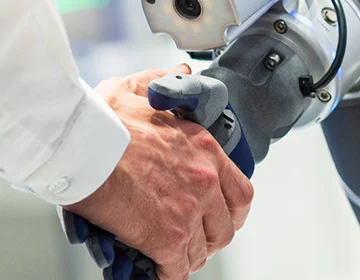
There’s an increasing reliance on robotics for end-of-line packaging processes. Indeed, the International Federation of Robotics reported a 51% increase in robotic installations during 2023. The benefits are clear, with robots performing repetitive tasks such as packing and palletising with high speed and accuracy. It’s becoming more common for autonomous mobile robots (AMRs) and Automated Guided Vehicles (AGVs) to be used for the movement of materials and finished goods. Pick-and-place, cartoning, and palletising tasks are being performed by robotic arms, boosting efficiency and minimising the risk of injuries associated with manual handling. Easily reprogrammable, such robotic systems can handle a variety of product types and tasks according to varying market demands. The integration of such advanced technologies can lead to cost savings, greater accuracy, and a competitive edge.
Packaging machines are increasingly connected with AI and IoT devices for the collection and analysis of real-time data. This is leading to the greater realisation of benefits such as predictive maintenance, quality assurance, and resource optimisation. Such devices allow for the real-time identification of bottlenecks and inefficiencies, with adjustments being made for optimal production. AI is also being used for the prediction of changes in demand, with manufacturers able to modify production processes accordingly.
Manufacturers are increasingly integrating automated systems to perform end-of-line tasks, such as sealing and labeling. Such systems have been proven to increase throughput speeds by 50%-75%, with improvements in dispatch efficiency. End-of-line automation also enhances traceability and accuracy at vital shipping points.
From the movement of pallets to the sealing of bottles, tasks that were previously carried out by hand and subject to human error are now performed by advanced machines. Plug-and-play and modular systems allow for quick changeovers, enabling the handling of various materials and packaging formats with minimal reconfiguration. Such systems are ideal for SMEs and short production runs, where agility is key.
A strategic approach is recommended for the best choice and integration of packaging automation systems. Manufacturers are advised to carefully review their expectations in terms of everyday operation, production output, and long-term growth. There should be some consideration of product and packaging complexity, along with the available factory space, and expected return on investment.
Automate UK suggests the prioritisation of flexible automation systems, with the capacity for reconfiguration according to varying production needs. Sustainability is another key factor, with the UK government specifying the need for all plastic packaging to be reusable, recyclable, and compostable. Manufacturers looking to future-proof their packaging processes are advised to choose modular systems, which can be upgraded over time. Such systems should be compatible with emerging packaging materials. Production monitoring devices should be integrated, with good energy efficiency optimisation essential for the reduction of the environmental impact. Rather than taking a one-size-fits-all approach, it’s vital to consider the unique production challenges and manufacturing aims.
As a leading trade association, Automate UK has a vital role in connecting technology suppliers, integrators, and manufacturers. We support packaging manufacturers through a variety of industry events, technical resources, and collaborative forums. In building connections and advising on the best technological choices, we’re confident in the realisation of a sustainable, productive, and resilient manufacturing sector.
Join Automate UK and look towards the transformation of product packaging and delivery with the latest and best technologies.