

Become a member
Take advantage of exclusive member benefits, world class events, networking and specialist support


 Become a member

16 March 2026
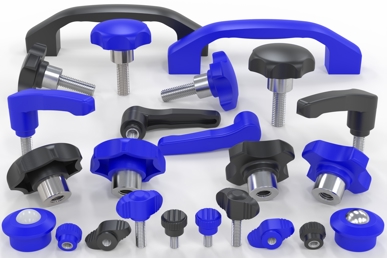
WDS Components has announced the launch of a new range of visually detectable and metal detectable products.
Developed to support damage mitigation and foreign body contamination control across manufacturing environments. The new range is engineered particularly for food processing, bakery, dairy, pharmaceutical and packaging production lines where stringent hygiene, audit and compliance requirements demand robust risk management strategies.
The products perform to a detection volume ≥ 0.027 cm³ and conform to EU10/2011 and FDA requirements.
Designed for Regulated Production Environments:
Visually and metal detectable components incorporate either high-visibility pigments or metallic additives within their material composition, allowing fragments or damaged parts to be identified through visual inspection systems or inline metal detection equipment.
In regulated sectors, foreign body contamination presents both operational and reputational risk. Integrating detectable operating elements into machinery and guarding systems enables manufacturers to strengthen preventative controls while supporting audit compliance.
Detectable components are commonly specified in applications aligned with Hazard Analysis and Critical Control Points (HACCP) principles. Where machine adjustment points or guarding systems form part of a defined Critical Control Point (CCP), detectable hardware supports documented risk reduction strategies.
By embedding detectability into machine elements, engineering teams can reduce the likelihood of contaminating fragments entering product streams while reinforcing contamination control protocols. Specifying detectable components can also support a broader design-for-compliance strategy that aligns mechanical design with hygiene, safety and audit requirements.
Application Categories:
The WDS detectable range is divided into two primary categories, supporting different inspection methodologies. Visually Detectable Products Visually detectable components are manufactured from high-contrast blue polymer. The colour is widely recognised in food production as a non-natural food colour, increasing the likelihood that fragments will be identified during inspection.
These components support manual inspection during cleaning and maintenance, pre-production line clearance checks, ongoing operational monitoring and automated optical inspection systems. The strong colour contrast helps fragments stand out against food products and stainless-steel processing equipment.
Metal Detectable Products
Metal detectable components are produced from engineering-grade polymers containing a homogeneously dispersed metallic additive. This ensures fragments remain detectable even if the component fractures or unevenly worn.
The parts are compatible with standard inline metal detection systems used across food, dairy and pharmaceutical production lines. If a fragment enters the product flow, it can be identified and rejected automatically, helping prevent contaminated product reaching downstream processes or customers.
Metal detectable polymers provide additional assurance in scenarios where fragments may not be visually apparent, such as enclosed conveying systems or opaque product streams.
Engineering Applications:
The WDS detectable range includes clamping knobs, star grips, wing knobs, adjustable handles, machine and pull handles, and locking and positioning components. Because these parts are frequently adjusted and exposed to mechanical stress, they can present contamination risk if damaged. Manufacturing them from detectable materials allows OEMs and end users to mitigate this risk at the design stage rather than relying solely on downstream inspection.
Technical Information and Availability:
The new detectable product range is available directly from WDS Components. Detailed technical specifications, dimensional data and CAD drawings are available to support both design integration and retrofit applications.
For further information, visit www.wdscomponents.com or contact the WDS technical support team.