
Become a member
Take advantage of exclusive member benefits, world class events, networking and specialist support


 Become a member

28 January 2026
Smart manufacturing involves the integration of advanced technologies for the support of and enhancement of human capabilities.
This is a growing trend, with 88% of companies confirmed as having invested or planning to invest in artificial intelligence and machine learning.
Such investment is having a transformative impact on the manufacturing sector, driving the improvement of efficiency, quality, and agility.
Read on as we highlight the characteristics of smart manufacturing and why it represents the future of industry.
As mentioned, smart manufacturing is specific to the adoption of advanced technologies such as artificial intelligence, the industrial internet of things, and robotics.
Using these technologies in combination, manufacturers can enhance human decision-making and support more efficient production.
Smart technologies can make a difference in overcoming supply chain bottlenecks, ensuring compliance with environmental regulations, and boosting innovation for greater competitiveness.
Tech UK defines the smart factory as “a digitised and highly automated manufacturing facility that uses connected devices, machinery and production systems to continuously collect and share data. This data is then used to improve processes as well as proactively address any issues that may arise along the production line.”
Smart technologies are under continuous development, with ever-greater benefits being realised by the UK’s manufacturers. We’ll explore the variety of smart manufacturing tools here.
The Industrial Internet of Things (IIoT) is based on the connection of machinery, tools, and sensors for the collection, interpretation, and analysis of manufacturing data.
Such technologies help in the monitoring of industrial processes, indicating potential problems and means of improvement.
Sensor technologies can also be integrated for insights into the use and possible enhancement of consumer products.
Directly linked with the IIoT, artificial intelligence (AI) is increasingly being integrated for the simulation and improvement of human-like capabilities.
Such systems can be programmed and monitored by factory staff for the performance of tasks in the dull, dirty, and dangerous categories.
AI-powered sensors can also be attached for the monitoring and analysis of machine data, helping to identify the need for preventative maintenance.
The use of such AI technologies reduces the risk of machine downtime, which might otherwise result in customer dissatisfaction.
Building on the technological capabilities, there’s the potential to replicate real-world objects and systems in the form of digital twins.
These replicas can be modified and tested to gauge capabilities across different manufacturing environments.
For instance, a factory digital twin could be used to monitor the impacts of vibrations and system adjustments, with valuable insights for the avoidance of machine breakdowns.
Simulations can also be used for virtual testing and improvement of manufacturing processes.
Other examples of smart manufacturing technologies include:
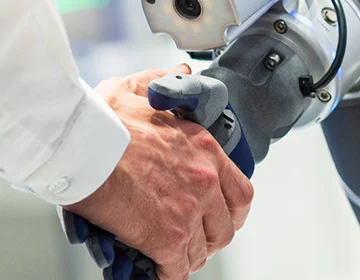
Advanced robotics - connected with the IIoT and AI, robots can be used for manufacturing purposes such as material handling and inspection. Robotic systems can be relied on for great precision, collaborating with humans for improved productivity and safety
Cloud computing and big data analytics - involving the internet-based collection and analysis of data, such technologies allow for improved decision-making and resource efficiency
Augmented and virtual reality - with a range of applications including training, and design prototyping, these digital environments enable the development of worker skills and reduction of errors.
The combined use of such smart manufacturing tools makes for the reduction of downtime, minimisation of waste, and improvement of product consistency.
The increasing adoption and impacts are clear, with 90% of UK firms having adopted at least one advanced digital technology.
Such adoption is being backed by the government, with the investment of £300 million into the Made Smarter programme.
This is intended to enable the development of a connected manufacturing system, boosting innovation and productivity.
The UK’s smart manufacturing market is expected to grow at a CAGR of 15.7%, reaching a value of over GBP 40 billion by 2030.
As Simon Maynard, Managing Director for Nordics, UK and Ireland at Orange Business, has said, “For UK manufacturing, staying competitive in today’s global market hinges on one thing: modernisation. Manufacturers must adopt future-proof, secure infrastructure that’s not only agile and data-driven but also built to support the demands of an increasingly digital and connected world.”
The adoption of advanced technologies is bound to boost agility, support customisation, and enable innovation.
It’s becoming increasingly clear that such technologies will enhance rather than replace the human workforce, enabling better decisions and greater productivity.
There are numerous real-world examples, reflecting the benefits of smart manufacturing technologies.
For instance, the May/June 2025 edition of Machinery Update focused on the development of autofocus cameras, enabling the AI-powered detection of defects on reflective automation parts (page 22).
The AI vision system detects and alerts vehicle manufacturers to a variety of surface defects, including scratches, pores, and dirt.
Checks are carried out at a rapid rate, with much greater reliability than can be achieved through manual inspection.
In another example, the July/August edition of Machinery Update highlighted Sidel’s development of a high capacity cobot-driven reel-loading system (page 18).
Automating the simple and repetitive process of mounting new reels onto labellers, the CoboREEL minimises the errors, delays, and misplacements that would otherwise result in downtime and reduced productivity.
There’s much greater scope for the realisation of such benefits through smart automation.
As the leading trade association for automation suppliers and technology end users, Automate UK is committed to supporting the beneficial adoption of smart technologies.
Providing key insights and enabling knowledge-sharing, we aim to ensure that such technologies are at the heart of a thriving UK manufacturing sector.
Members stand to see the greatest benefit, as we actively showcase and promote the adoption of technologies such as AI, IIoT, and robotics.
Join Automate UK in looking towards a smarter, tech-powered future.