Become a member
Take advantage of exclusive member benefits, world class events, networking and specialist support


 Become a member

6 May 2026
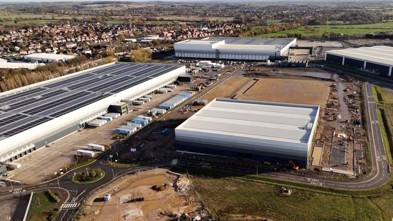
On the outskirts of Derby, in the U.K., a different kind of food factory is taking shape. Spread over 100 acres, SmartParc is a purpose-built manufacturing park designed around one idea: that food can be produced more efficiently, collaboratively and more sustainably when producers stop duplicating infrastructure and start sharing it.
Food manufacturing: a sector under pressure:
The food industry is facing unprecedented challenges. Inflation is squeezing margins in an already low-profit sector. Many producers are operating from aging facilities that are energy-hungry and difficult to decarbonize. At the same time, customers, regulators and investors demand real progress towards net-zero greenhouse gas emissions. “A lot of food factories in the U.K. and across Europe are more than 20 years old,” says Phil Lovell, Chief Operations Officer of SmartParc Europe. “They are tied to legacy buildings that are inefficient. Energy costs are high, processes are constrained and sustainability targets are becoming much harder to reach.” SmartParc is a response to these pressures, focusing instead on the entire food manufacturing ecosystem.
The SmartParc concept:
The idea is simple, but powerful: Cluster modern, purpose-built food factories on a single site and manage key services centrally. Rather than duplicate assets, key infrastructure such as energy generation, utilities and distribution services are designed as shared systems. This approach delivers economies of scale that individual manufacturers could never achieve alone. Production lines are designed first, then wrapped in highly efficient buildings. Centralized management reduces complexity, while proximity between tenants slashes food miles, lowers transport emissions and extends product shelf life. “By clustering buildings together, you reduce truck movements and reduce waste. Businesses can even sell to each other on site, if they choose,” explains Lovell. “Combined, these measures support lower costs and build producers’ sustainability credentials.” However, for SmartParc to deliver on its efficiency promise, the site’s energy system would need to look forward, not to the past.
Rethinking energy with waste heat recovery:
Working with GEA, SmartParc created a shared energy network that instead of treating energy as a by-product or waste, instead captures, recalibrates and redistributes it. This helps tenants take meaningful steps toward net zero without sacrificing reliability or performance. “SmartParc looked at this as a sustainability project right from the beginning,” says John Burden, Director Project Sales Heating and Refrigeration Solutions at GEA U.K. “So instead of rejecting heat to the environment, GEA designed a district heating network for them that captures and reshares this heat across the park.” This solution works by capturing the heat generated by the refrigeration processes, sends it through an industrial ammonia heat pump, then stores and shares it via more than 11 kilometers of underground pipework with the tenants. The same principle is used in district heating networks that supply cities with energy: At the Derby site, any connected business can draw on the network for energy, even if they did not generate it themselves. The result is a closed-loop system that balances heating and cooling needs across multiple users – at scale.
https://www.gea.com/en/stories/smartparc-gea-shared-energy-food-production/