
Become a member
Take advantage of exclusive member benefits, world class events, networking and specialist support


 Become a member

20 December 2023
Technology doesn’t evolve in a silo. This much is clear in the connected evolution of automation, robotics, processing, packaging and industrial vision technology. Lessons have been shared and applied in the development of each of these technologies. This combination has had a revolutionary impact on various industries, with significant improvements of efficiency, precision and innovation. Read on as we explore the connected development and application of such technologies in this blog.
Robotics and automation tools were initially brought into the workplace with the vision of freeing humans from boring, repetitive and dangerous tasks. Their introduction also allowed for greater consistency, with an ever-widening range of manufacturing applications.
As innovation has gathered pace we have seen the introduction of intelligent automation technologies, including AI automation, robotic process automation (RPA), and autonomous systems. Such technologies have enabled the automation of basic tasks, simplifying processes, freeing up resources, and boosting operational efficiencies. Building on human thought processes and physical capabilities, they can be relied on for speed and consistency.
Automation has revolutionised processes and boosted productivity in the following ways:
From manufacturing and assembly lines to warehousing and logistics, robotic systems have proven of value across a range of industrial settings. This trend accelerated during the pandemic, when such technologies took the place of locked-down and physically-distanced workers. Robotic systems have also been seen as the solution to workforce shortages resulting from COVID, Brexit and wide-spread retirement.
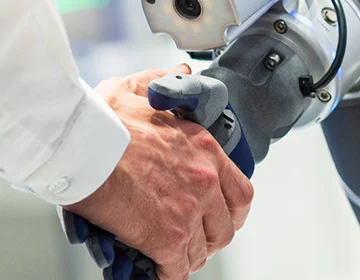
We have seen a rise in the use of collaborative robots (cobots), during recent years too. Designed to augment the work carried out by humans, these robot partners are suitable for such applications as food packaging, quality inspection, and retail support. With significant enhancements of safety and productivity, it’s been forecast that cobots will account for 30% of the total robot market by 2027.
Here are some other instances where robotics are being utilised for tasks that are intricate, dangerous, or require high precision:
There are numerous examples of technological innovations allowing for the improvement of manufacturing processes. In the motoring industry, such innovations can be traced back to the introduction of the conveyor belt system within Ford’s production process. More recently we’ve seen the introduction of the Toyota’s Production System (TPS). These process adjustments have resulted in benefits such as the reduction of production times, minimisation of waste, and increase of profits.
Processing innovations have also been associated with:
There have been major innovations in the packaging of consumer goods too. Making for improvements of product quality, safety, and shelf-life, such smart packaging solutions have been adopted by well-known consumer brands such as Yeo Valley and Lay’s (the international equivalent of Walkers crisps). The automated and eco-friendly packaging of goods has also become increasingly common.
The importance of sustainable processing and packaging is reflected in these statistics:
As the title suggests, industrial vision technology is used for the visual inspection and quality control of manufactured products. Such technology is integrated with optics for image capture and software that interprets the visual input. The computer-based display of such image data allows for decisions to be made as to whether items are fit for use. While the development of machine vision can be traced back to the 1980s, more recent innovations have allowed for application across a range of sectors, including healthcare and transportation.
Used for such purposes as inspection, measurement, and assembly verification, machine vision is also an enabler of robotics and various automation functions. It allows for the highly precise alignment and placement of parts, eliminating the need for fixturing and improving robot flexibility. Other benefits of industrial vision include the optimisation of product quality, reduced machine downtime, and more comprehensive control over the manufacturing process. This makes for the quicker delivery of higher quality parts and greater customer satisfaction.
The Machinery Update publication has shared numerous examples of transformational vision technologies. In the summer of 2023 we reported on the development of a special 3D stereo vision based inspection solution that ensures optimum chocolate display box presentation and delivers labour savings. Performing a task that would otherwise have to be carried out by trained operatives and achieving almost 100% accuracy, this system helps confectionary manufacturers and packers to combat unskilled labour shortages and boost line efficiency.
Allied Vision’s eSorter system is another example, allowing for high-level accuracy in the detection of parcels for robot picking and orientation. Equipped with a Nerian 3D stereo vision system, the eSorter can provide up to 135fps or process up to 6 MP. Complete with USB3 camera support, it is a highly flexible sensor that allows configuration and adaptation to a wide variety of applications.
As mentioned, there is direct synergy between automation, robotics, processing, packaging, and industrial vision technologies. While automation tools and robotics allow for greater manufacturing accuracy, efficiency, and accuracy, industrial vision technologies ensure the identification of defects and supply of the highest quality products. Packaging innovations mean that such products can be kept safe, while minimising the harmful impacts on the environment. Costs can also be reduced throughout manufacturing and supply chains, with such benefits being passed on to the consumers.
These examples highlight the transformative possibilities of technological collaboration:
Given the wide variety of benefits, we can expect the already significant investment in such connected technologies to grow. It’s forecast that 20% of jobs will be automated by the late 2020s, rising to 30% by the mid 2030s. AI developments are expected to make robots easier to use, widening their application across a variety of sectors. Continued workforce shortages and international disruptions are expected to drive further investment in robotic automation with the aim of increasing flexibility, resilience, and sustainability. Developments of high-speed data transmission, bandwidth-intensive applications, and emerging technologies are also expected to drive the demand for machine vision.
As the Indian author and change management expert Sukant Ratnakar has said, “Our future success is directly proportional to our ability to understand, adopt and integrate new technology into our work.” This will also depend on our ability to overcome challenges of data security, ethics, and the growth of human knowledge. It will mean working with technology to augment our capabilities, in the faith that the robots aren’t coming to take our jobs.
As the leading trade association for automation suppliers and technology end users, Automate UK has a vital role to play in overcoming such challenges. Aiming to drive industry progress and foster widespread technological adoption, we are committed to helping our members and their clients thrive and increase productivity in an increasingly competitive marketplace.
We drive the progress of automation technologies in the following ways:
Together, we innovate the future of automation.
It’s clear that automation, robotics, processing, packaging, and industrial vision have an increasingly connected and significant role in our tech-focused world. Continuing investment in such technologies is bound to drive ever-increasing efficiency, precision, flexibility and safety. However, the realisation of such benefits will depend on a shared commitment to continuous innovation, collaboration, and adaptability in the fast-changing industrial landscape.
Join Automate UK in embracing these technologies and realising a vision of the future where efficiency, precision, and sustainability go hand-in-hand. Engage in discussions and share your experiences through social media. Keep on learning and making smart technological decisions with the expert insights delivered by our leading trade association.
Delve deeper into the transformative potential of technologies with these resources:

With the biggest processing and packaging machinery, robotics and industrial vision event in the country returning to the NEC, Birmingham this month, organisers Automate UK have announced the stars of its Innovations Eleven live demonstration theatre, one of the key highlights of the show.
Read More

With the UK’s largest processing and packaging machinery, robotics and industrial vision event, the PPMA Show® 2026, just one month away, organisers Automate UK have released further details on some of the solutions being showcased by exhibitors to resolve some of the key issues being faced throughout the sector.
Read More
Automate UK has confirmed some of the manufacturers secured for the PPMA Show® 2026 to date and offered a preview of the some of the solutions being exhibited to counter the challenges facing the industry today.
Read More Members News
Whether businesses are already using automation, exploring robotics for the first time, or simply looking for ways to overcome operational challenges, improve quality, and increase productivity, this forum will provide practical insights from industry, technology, finance, and safety experts.
Read More
How BS EN ISO 9001:2026 helps manufacturers manage risk, maintain consistency and get more value from robotics, turning automation into a genuine driver of long-term quality.
Read More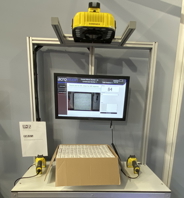 Members News
The Acrovision Validator Multi is an advanced end-of-line packaging verification and label inspection system designed to ensure product accuracy, serialisation compliance and complete shipment validation before dispatch.
Read More
We are delighted to learn that our GEA Cloud® technology has been shortlisted in the Innovative Processing System category at this year's Automate UK Awards.
Read More Industry news
There’s great potential for UK manufacturers to reduce downtime through AI-powered maintenance. Find out more ahead of the PPMA Show® 2026.
Read More
From tamper-proofing to labelling and serialisation, this blog sets out the secondary packaging requirements for pharmaceuticals. Update your knowledge ahead of the PPMA Show® 2026.
Read More